

News
The Human Rights Center responds to the verdict delivered by Tbilisi City Court in the case concerning the assault on journalist Guram Rogava and expresses concern over restrictions on the victim's rights during the court proceedings, the lack of transpar
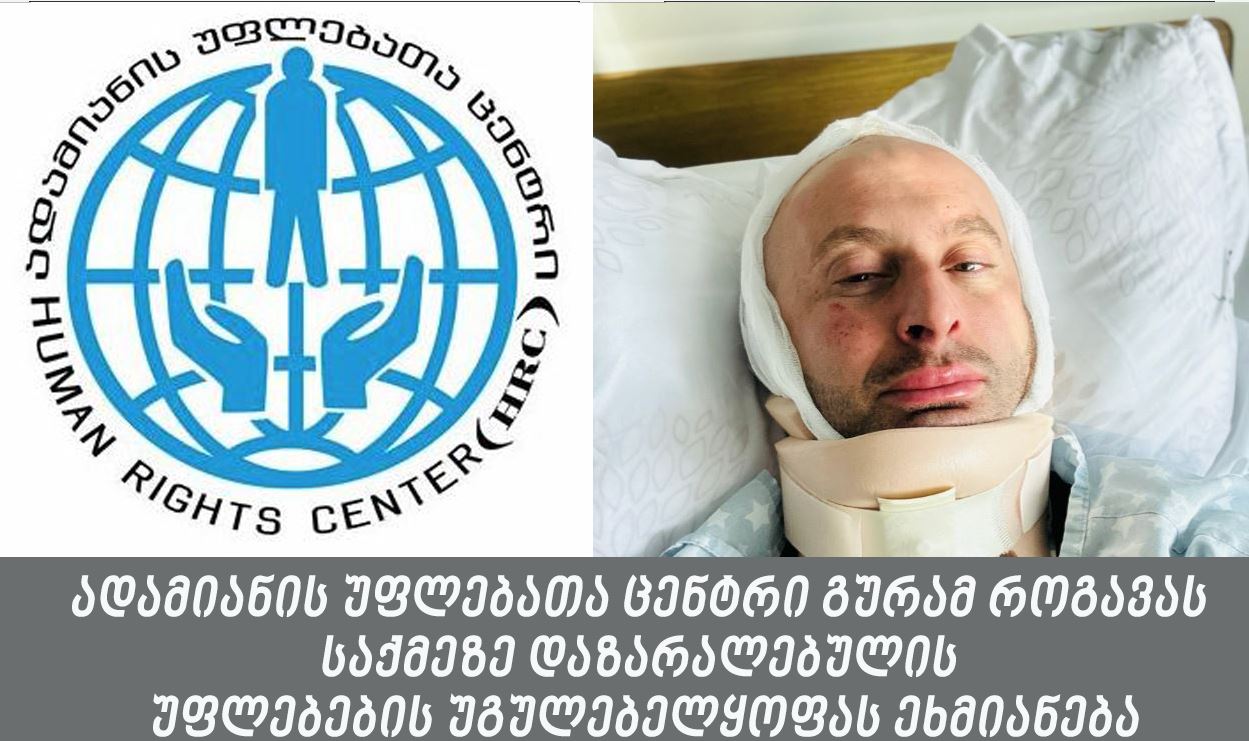


The Human Rights Center responds to the verdict delivered by Tbilisi City Court in the case concerning the assault on journalist Guram Rogava and expresses concern over restrictions on the victim's rights during the court proceedings, the lack of transparency in the trial, and issues related to the outcome of the investigation.
On November 29, 2024, while covering an ongoing protest demonstration in Tbilisi, Guram Rogava, a Formula TV journalist, was physically assaulted by an officer of the Special Tasks Department of the Ministry of Internal Affairs. The assault was broadcast live. As a result of the attack, the journalist sustained serious injuries.
On November 12, 2026, Tbilisi City Court concluded the trial concerning the assault on Guram Rogava and sentenced the defendant, Guram Kirkitadze, to five years' imprisonment.
In the Human Rights Center's assessment, the verdict and the circumstances surrounding the proceedings fail to address the legitimate questions raised by the victim regarding the identification of the assailant, the reliability of the investigation, and his participation in the administration of justice.
According to Guram Rogava, despite having been granted victim status in the criminal proceedings, he was not given an opportunity to express his position or provide the court with information concerning the violence committed against him and the harm he suffered. The journalist states that he was prohibited from attending court hearings on the grounds that the proceedings were being conducted behind closed doors. Consequently, the trial on the merits concluded without the victim being heard by the court.
The Human Rights Center emphasises that victim status must not be merely formal but must be accompanied by an effective opportunity to exercise the rights guaranteed by law. Article 57 of the Criminal Procedure Code of Georgia grants victims the right to provide the court with information about the harm caused by a criminal offence. Ensuring the practical exercise of this right is particularly important in cases where the victim personally challenges the findings of the investigation.
Furthermore, conducting hearings behind closed doors in a case of significant public interest requires particularly clear and well-reasoned legal grounds. Restrictions on the public nature of judicial proceedings must not become a means of excluding public scrutiny or undermining transparency in the administration of justice.
Guram Rogava has publicly stated that the individual who directly perpetrated the violence against him remains at liberty. The journalist questions whether the convicted individual was correctly identified and points to the possibility of an informal arrangement under which, he suspects, another person assumed responsibility for the assault. Given the gravity of this suspicion, it is essential that the investigative authorities conduct an independent and impartial examination of the relevant circumstances.
Considering the scale of violence perpetrated by law enforcement officers during the 2024 protest demonstrations, the Human Rights Center maintains that Guram Rogava's case must not be examined in isolation. Although pursuing criminal accountability in individual cases represents an important step, the current findings of the investigations fail to address the systemic nature of the violence documented during the protests.
The Human Rights Center considers that the investigation must examine not only the actions of the direct perpetrators but also possible instances of planning and organising the violence, issuing relevant orders, and supervising their execution. The investigation must also address the potential responsibility of senior officials, including those who were under an obligation to prevent the violence and ensure an appropriate response. Furthermore, the legal classification of the offences warrants particular attention. Classifying acts of severe physical violence, possible torture, and inhuman or degrading treatment solely as exceeding official powers or obstructing journalistic activities may fail to reflect the full gravity of the acts committed and hinder the identification of those responsible.
An effective investigation must ensure that all the circumstances of the events are established, every potential level of responsibility is identified, and victims are guaranteed genuine access to justice.
Under Article 3 of the European Convention on Human Rights, the State has an obligation to conduct an effective investigation into arguable allegations of ill-treatment. Violence against a journalist in the course of performing professional duties also raises additional concerns regarding freedom of expression, as protected under Article 10 of the Convention.
The Human Rights Center has been representing and protecting Guram Rogava's legal interests since the assault. Conducting effective investigations into violence against journalists and bringing those responsible to justice constitute positive obligations of the State. Accordingly, impartial and fair judicial decisions in this case are of particular importance.
Human Rights Center
The Human Rights Center responds to the verdict delivered by Tbilisi City Court in the case concerning the assault on journalist Guram Rogava and expresses concern over restrictions on the victim's rights during the court proceedings, the lack of transpar
Joint Statement by Georgian Civil Society Organizations on the Constitutional Lawsuit Seeking to Ban Opposition Parties